
Sustainability
As important as our history is, what we care most about is the idea of sustainability. Our focus is on developing processes that are sustainable for the long term while also being a collaborative effort with the environment around us. Soil regeneration, biodiversity, and water conservation are some of the most important areas of focus for the team here at the winery.
For our crops, we’ve made the switch from synthetic fertilizers to organic, which is not only better for the soil long term, but it produces higher-quality fruit. For pest control, the majority of our pesticides are approved for organic farming, but we are still limited in some instances and may have to use chemical pesticides at certain times. The use of these chemical pesticides is as limited as possible for the health of our farm team, pollinators and other wildlife, and the end consumers. To keep the soil fertile, we use compost, mulch, and cover crops between the rows. Plants grown in rich, nutrient-dense soil are healthier and better able to protect themselves from pests and disease, which limits the need for pesticides and heavy fertilizers. As our Director of Operations Noemie always says, “Feed the soil, not the plant”.
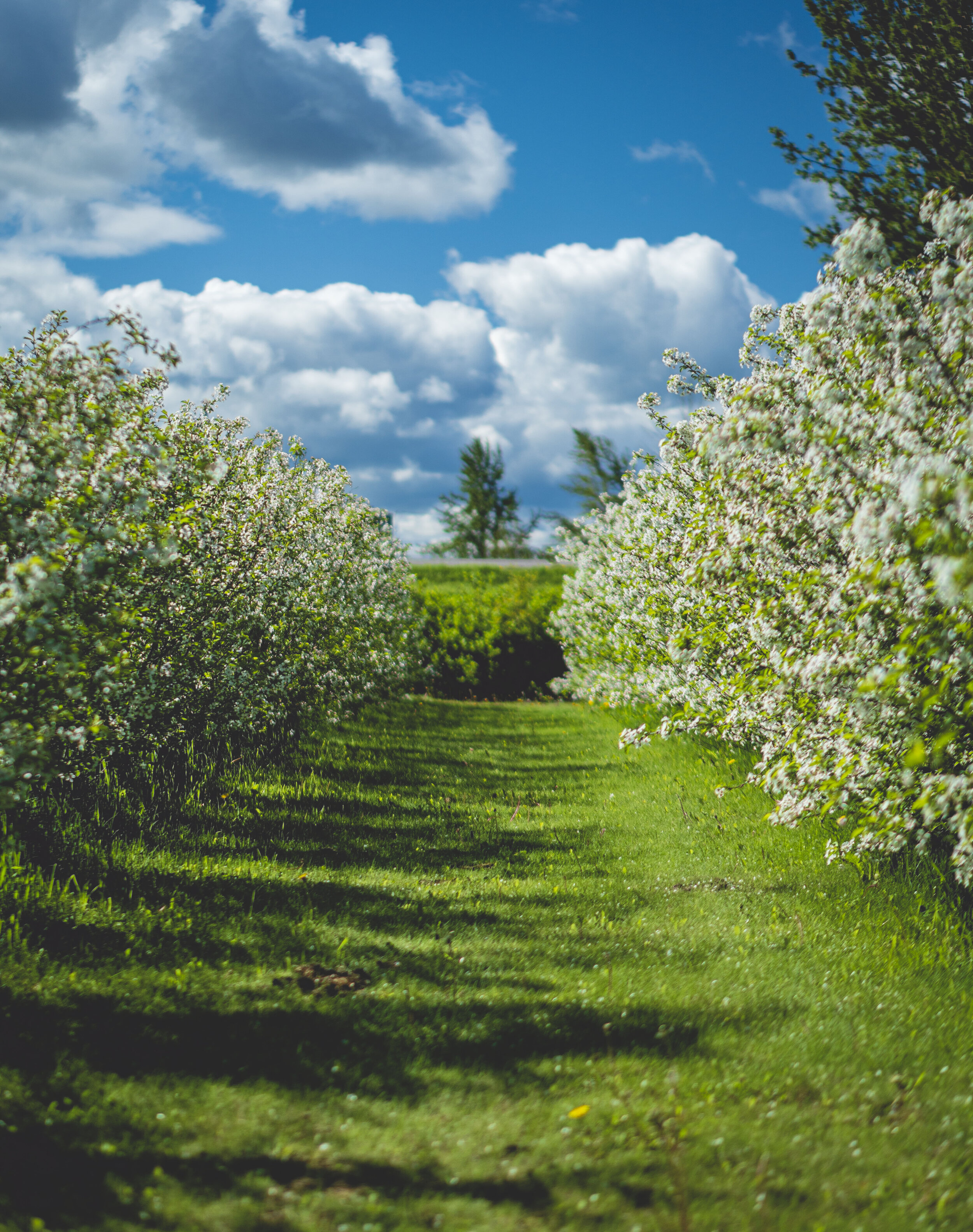
Many may not think of Prince George as a very biologically diverse area, but they’d be surprised at the crops we’ve been able to grow. Our current crops are gooseberries, raspberries, blueberries, Saskatoons berries, apples, rhubarb, and hopefully soon, kiwis. These crops provide natural nesting areas for wildlife as well as food for native pollinators.
A lot of crops means a lot of water usage right? Not for us! We use a drip tape irrigation system that’s controlled by a panel. This underground watering system reduces runoff while eliminating the issue of evaporation that happens with traditional sprinkler systems.
Being located along the powerful Nechako River, we feel it’s our responsibility to keep the riverbank beautiful and limit stream bank erosion. Together with a local biologist, we’ve created an exhaustive Riparian Restoration Plan to keep riverbank erosion at a minimum.
Why our Wines are Vegan
Not only is sustainability important to us, but we’ve also ensured our wines are 100% vegan. During the fining process many wineries choose various animal byproducts to remove impurities from their wines. Most often these fining agents are egg whites, gelatin, casein, or isinglass. Instead of these traditional fining agents, we choose to use bentonite clay. This ensures our wines have the clarity we strive for while eliminating any need for animal byproducts.
Our love and respect for the land is put into each and every bottle of wine we produce here at Northern Lights.

Carbon Neutrality
We are incredibly proud to be a carbon-neutral winery. We reached this milestone by purchasing offsets through Ostrom Climate (Formerly Offsetters) which counteract the carbon emissions generated through our daily operations.
To measure our annual carbon emissions, we partner with Dr. Sinead Earley and a research student from the University of Northern British Columbia. They divide our operations into three sections in terms of carbon emissions: Scope 1, Scope 2, and Scope 3. The first section, Scope 1, looks at our use of natural gas, propane, and diesel, Scope 2 analyzes electricity usage, and Scope 3 covers travel and distribution emissions. To be considered carbon neutral, businesses need to offset Scope 1 and 2 while Scope 3 is an optional analysis to provide insights into limiting future carbon emissions.
Scope 1
Natural Gas
Like most who live in the North, we rely on natural gas to help operate our buildings. In 2025, natural gas remained our largest source of direct emissions, totaling 50.14 tCO₂e. While heating is essential in our climate, we continue to look for ways to reduce usage through efficiency improvements such as upgraded insulation, heat pumps, and smarter temperature control systems.
Gasoline and Diesel
Gasoline and diesel are used to power our day-to-day operations, including farming equipment, tractors, and delivery vehicles.
In 2025:
Gasoline emissions totaled 5.15 tCO₂e
Diesel emissions totaled 1.40 tCO₂e
These fuels are necessary to maintain vineyard operations and support local deliveries, but we continue to monitor usage and explore ways to improve efficiency where possible.
Propane
Propane use remains minimal and is no longer used for building heating. In 2025, propane emissions were reduced to 0.30 tCO₂e, with usage limited to small applications such as patio heaters.
Scope 2
Electricity
Like most businesses, we rely on electricity to keep things running—from lighting and refrigeration to winemaking equipment and kitchen operations.
In 2025, our electricity use resulted in 1.08 tCO₂e.
Because our electricity is sourced from BC Hydro, which has a low-carbon energy grid, our Scope 2 emissions remain relatively low compared to other areas of our operations.
Scope 3
Shipping - Materials and Supplies
In 2025, emissions from incoming materials - including wine bottles, fruit, and other supplies remained a significant part of our footprint.
The largest contributor continues to be bottle transportation, with shipments arriving from overseas before being transported to Prince George. Fruit and other materials are primarily sourced from within British Columbia, helping to keep these emissions comparatively lower.
Shipping - Finished Goods
Our distribution emissions remained relatively low in 2025, totaling 2.06 tCO₂e, supported by local deliveries and regional distribution networks. Canada Post introduced carbon-neutral shipping, meaning emissions from direct-to-consumer shipments are now counted as 0 tCO2e. Additionally, we discontinued food delivery services through third-party providers like SkipTheDishes and DoorDash, further reducing emissions.
Employee Commuting
Employee commuting was the largest single contributor to our emissions in 2025, totaling 61.54 tCO₂e.
As our team grows, so does the impact of daily travel to and from the winery. Moving forward, we are exploring ways to reduce this footprint, including encouraging carpooling and more efficient commuting options.
Business Travel
Business travel emissions totaled 0.68 tCO₂e in 2025. These emissions were associated with a small number of flights and work-related travel. We continue to limit non-essential travel wherever possible.
